
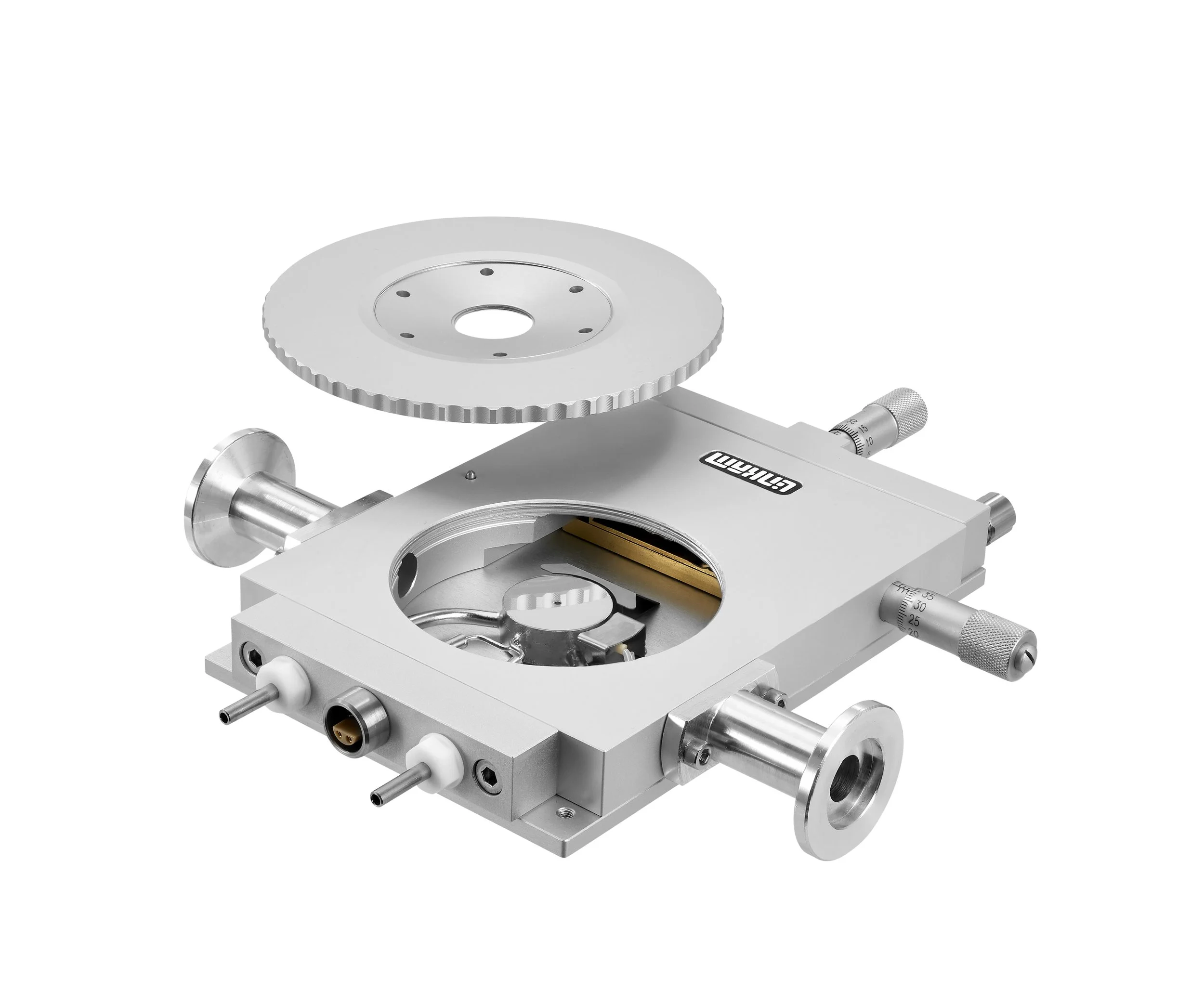
FDCS shown above
Researchers at The University of Alberta, Canadian Blood Services, and Queen's University are using the Linkam FDCS196 system to evaluate the quality of cryopreserved red cell concentrates (RCCs) after transient warming events (TWEs), to ascertain the impact these events have on cell quality.
In their study, they placed RBC/glycerol samples on the FDCS196 stage, programmed temperature profiles to mimic the warming/freezing conditions used in the blood-unit experiments, nucleated and froze the samples in a controlled way, then imaged them during repeated TWEs to measure ice crystal area. The FDCS196 allowed the researchers to recreate transient warming events under tightly controlled cryogenic conditions and directly visualise ice recrystallisation, providing invaluable insights into repeated warming exposures and the observed deterioration in red blood cell quality.
This study carries important significance to blood bank handling scenarios because TWEs can happen during freezer failures, transport, checking inventory, or human errors. These blood units are often discarded out of caution, causing disruption to blood bank service especially when they are rare and expensive to replace.
Read the full article here