
Researchers at The Spanish National Research Council (CSIC), Madrid, Spain describe how growth hormone (GH) changes the metabolism and mitochondrial structure of inflammatory macrophages in their paper, ‘Growth hormone remodels the 3D-structure of the mitochondria of inflammatory macrophages and promotes metabolic reprogramming’ .
Macrophages are immune cells that can adopt either:
a pro-inflammatory state (GM-MØ / M1-like), or
an anti-inflammatory, tissue-repair state (M-MØ / M2-like).
The researchers discovered that growth hormone acts as a metabolic regulator that shifts inflammatory macrophages toward a less inflammatory, more reparative phenotype.
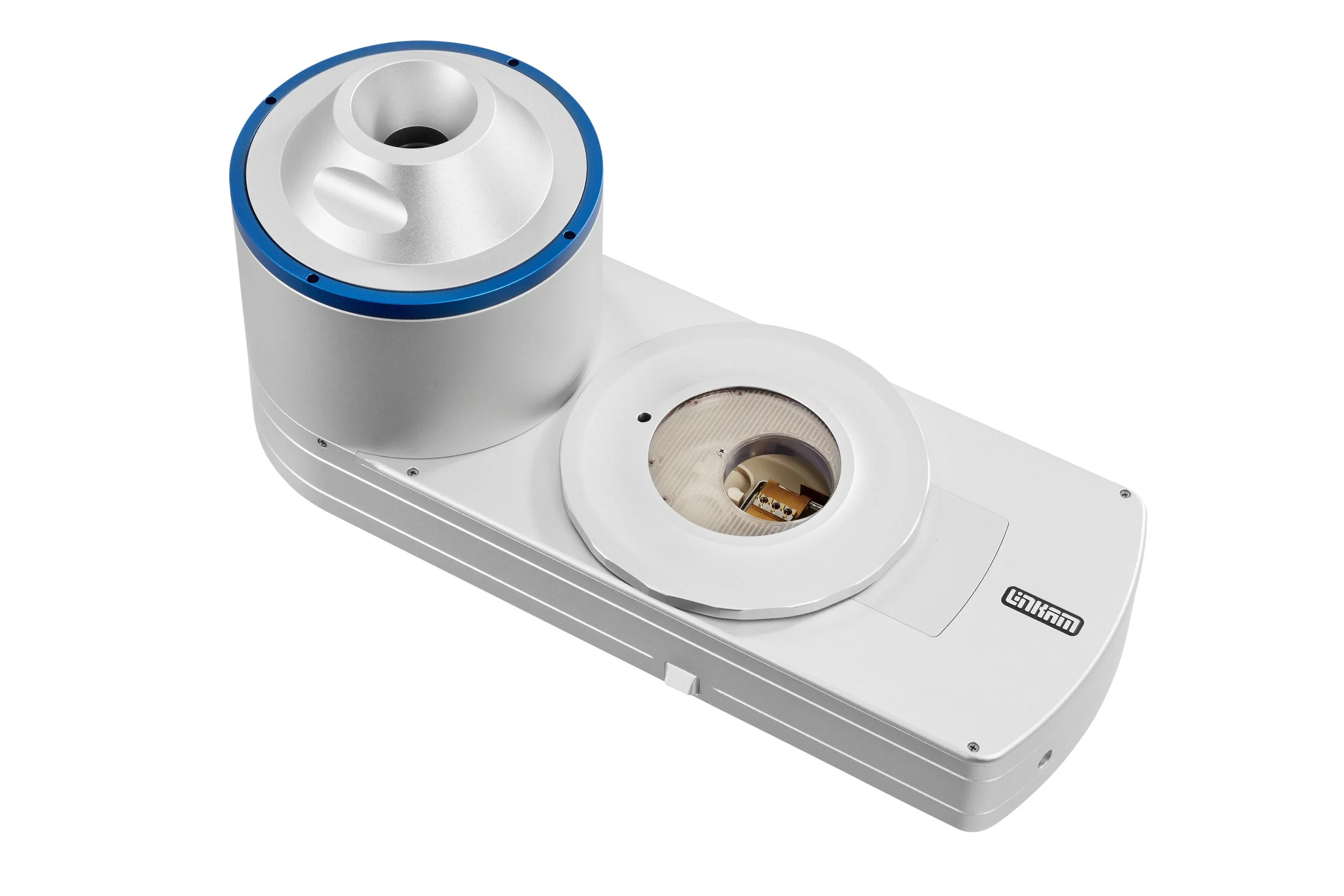
CMS196V4 shown above
In this research, macrophages grown on EM grids were rapidly plunge-frozen (vitrified) before imaging. The Linkam CMS196 Cryo-correlative Stage was integrated with a Zeiss LSM 900 confocal microscope for cryo-fluorescence microscopy. The CMS196 stage maintained these samples at stable cryogenic temperatures during fluorescence imaging, which allowed the team to study mitochondria in a state much closer to living cellular conditions. This also enabled them to map cells of interest on frozen grids, and correlate those exact regions later in cryo-FIB-SEM imaging.
This correlation was essential because fluorescence microscopy alone cannot reveal ultrastructural mitochondrial details, while electron microscopy alone lacks molecular specificity.
Read the full article here.