
Researchers at Pontificia Universidad Católica de Chile and The Spanish National Research Council (CSIC), Madrid, Spain investigated how the bacterial division protein FtsZ organises and behaves during cell division in the filamentous cyanobacterium Anabaena sp. The researchers created fully functional fluorescent FtsZ fusion strains to observe Z-ring behaviour in living cells with high-resolution microscopy.
FtsZ is a tubulin-like protein that forms the “Z-ring,” a structure essential for bacterial cytokinesis. While Z-ring organisation has been studied in several bacteria, little was known about its architecture and dynamics in multicellular cyanobacteria.
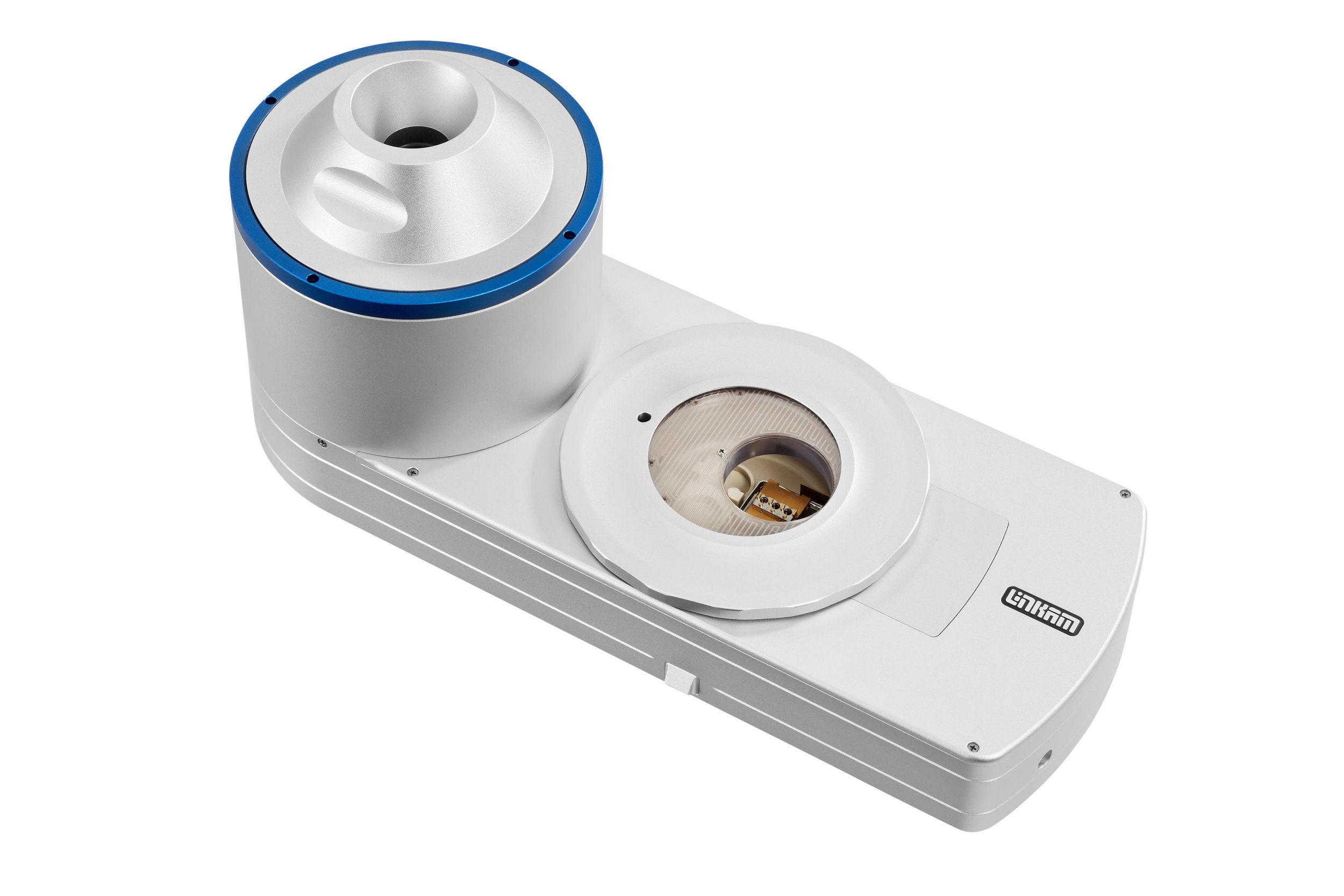
CMS196V4 shown above
A major technical component of the study was the use of the Linkam CMS196 Cryo Correlative Stage during cryo-CLEM experiments. The stage was specifically integrated with a Zeiss LS900 Airyscan2 confocal microscope for cryogenic fluorescence imaging.
The researchers vitrified Anabaena cells by rapid freezing in liquid ethane before imaging. The CMS196 stage maintained the samples at stable cryogenic temperatures during microscopy.
This integration allowed them to visualise both the molecular dynamics of FtsZ and the physical organisation of cellular structures during cyanobacterial cell division with exceptional accuracy and preservation.
Read the full article here.