
New Year, New Products

 Linkam stage. Photo by Linkam's Jim Hayward


Linkam stage. Photo by Linkam's Jim Hayward

Welcome back everybody, and a Happy New Year!

At Linkam we have set ourselves a couple of resolutions for the year 2016.

Firstly, we will seek more feedback regarding our stages, so we can continue to refine them to best meet our users’ wants and needs. We hope this is something you might be able to help us with and look forward to talking with you all a bit more over the coming year.

Secondly, we will release a whole range of exciting new products, including our new LINK64 software. 

For updates keep an eye on the website, and on our Twitter and LinkedInpages. Or, if you want to come and see us in person, you can find details of the trade shows Linkam, and our distributors, will be attending in 2016 over on our events page.
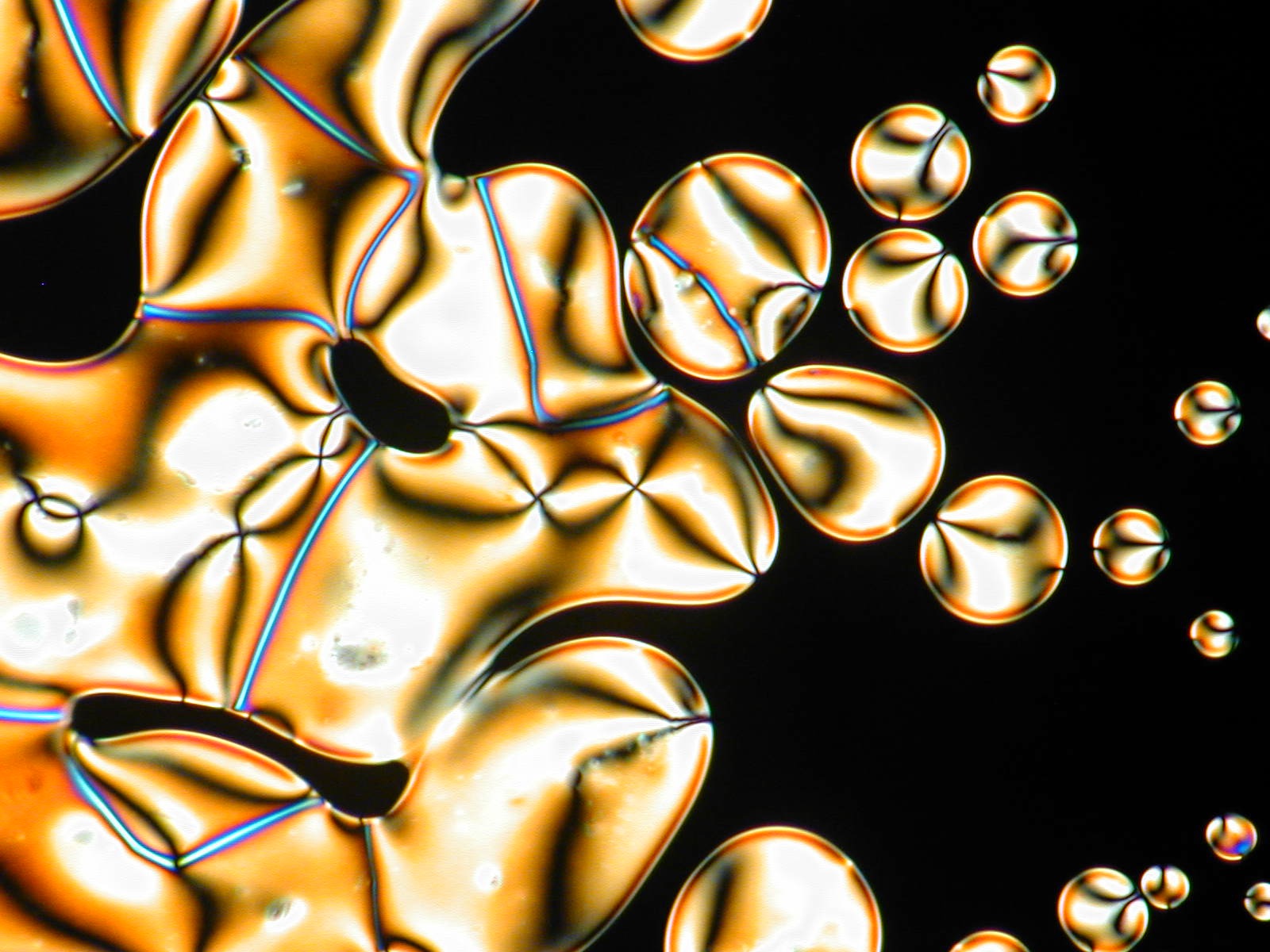
Liquid Crystal Microphotography with Linkam

 Nematic Liquid Crystals. Photo by Dr Vance Williams, Simon Fraser University.


Nematic Liquid Crystals. Photo by Dr Vance Williams, Simon Fraser University.

We recently discovered an amazing liquid crystal photo gallery, with a collection of microphotographs all taken using a Linkam LTS350 stage (predecessor to the LTS420).

The photos were taken by Dr Vance Williams, an Associate Professor at Simon Fraser University in British Columbia, Canada, who is Principal Investigator in an organic materials chemistry group called the Williams Research Group.

The group works with liquid crystals, molecular photoswitches and birefringent materials.

Their liquid crystal research focuses on uncovering the factors and interactions that control the self-assembly of liquid crystals through the design and synthesis of new liquid crystalline materials.

Liquid crystals are an intermediate state of matter between conventional liquids and solid crystals, with properties of both. There are many types of liquid crystal phases, which are distinguishable by their different optical properties. Viewed under a polarised light microscope, their different phases show impressive textures and birefringence colours.

The best known application of liquid crystals is in electronic displays, specifically ‘liquid crystal displays’ (LCDs) for computer monitors and televisions, But they can also be found in abundance in living systems, for example, as proteins and cell membranes. 

Dr Williams is a keen microphotographer, an example of his work can be seen above, but for more pictures visit his site. We hope we will be able to feature more of his work in the future.

Linkam stage in Antarctica

Pteropod Limacina helicina antarctica. Photo taken by the Hofmann Group, using a Wild M37 stereomicroscope and Linkam PE120 stage

Pteropod Limacina helicina antarctica. Photo taken by the Hofmann Group, using a Wild M37 stereomicroscope and Linkam PE120 stage

A team from the Hofmann Lab at the University of California, Santa Barbara, are studying the impacts of ocean acidification in calcifying marine invertebrates such as the pteropod Limacina helicina antarctica (pictured).

The team are based at the McCurdo research station in Antarctica, and have been using the Linkam PE120 stage to observe samples both at ambient temperature and at -5°C.

Read more on their research here


Linkam Press Releases October/November 2015

 A post doctorate research associate from Professor Rachel Williams' group at the University of Liverpool uses the Linkam TST350 stage at room temperature to characterise novel polymer materials


A post doctorate research associate from Professor Rachel Williams' group at the University of Liverpool uses the Linkam TST350 stage at room temperature to characterise novel polymer materials

9th October 2015 

Temperature Controlled Stage used in the Characterisation of Novel Electrolytes for more Efficient and less Volatile Fuel Cells

Linkam Scientific Instruments report on the use of their temperature controlled stages in the study of the novel electrolytes that can be used in fuel cells. This work was carried out at the Katholic University of Leuven in Belgium. 

27th October 2015

Tensile Stage Used to Assist with the Development of New Materials that Address Eye Healthcare in the Ageing Population 

Linkam Scientific Instruments report on the use of their tensile temperature controlled stage to develop and characterise novel materials that address the growing burden of eye healthcare in an ageing population. This work is being carried out at the University of Liverpool in the research group of Professor Rachel Williams.

4th November 2015 

Linkam stages in use in the Wolfson Bioimaging Facility at the University of Bristol as part of the endocytic sorting research of Dr Paul Verkade

Linkam Scientific Instruments report on the use of their temperature controlled stages applied to CLEM and fluorescence microscopy to assist in endocytic sorting in the School of Biochemistry at the University of Bristol.