
E-skin: Understanding mechanical properties of flexible electronics

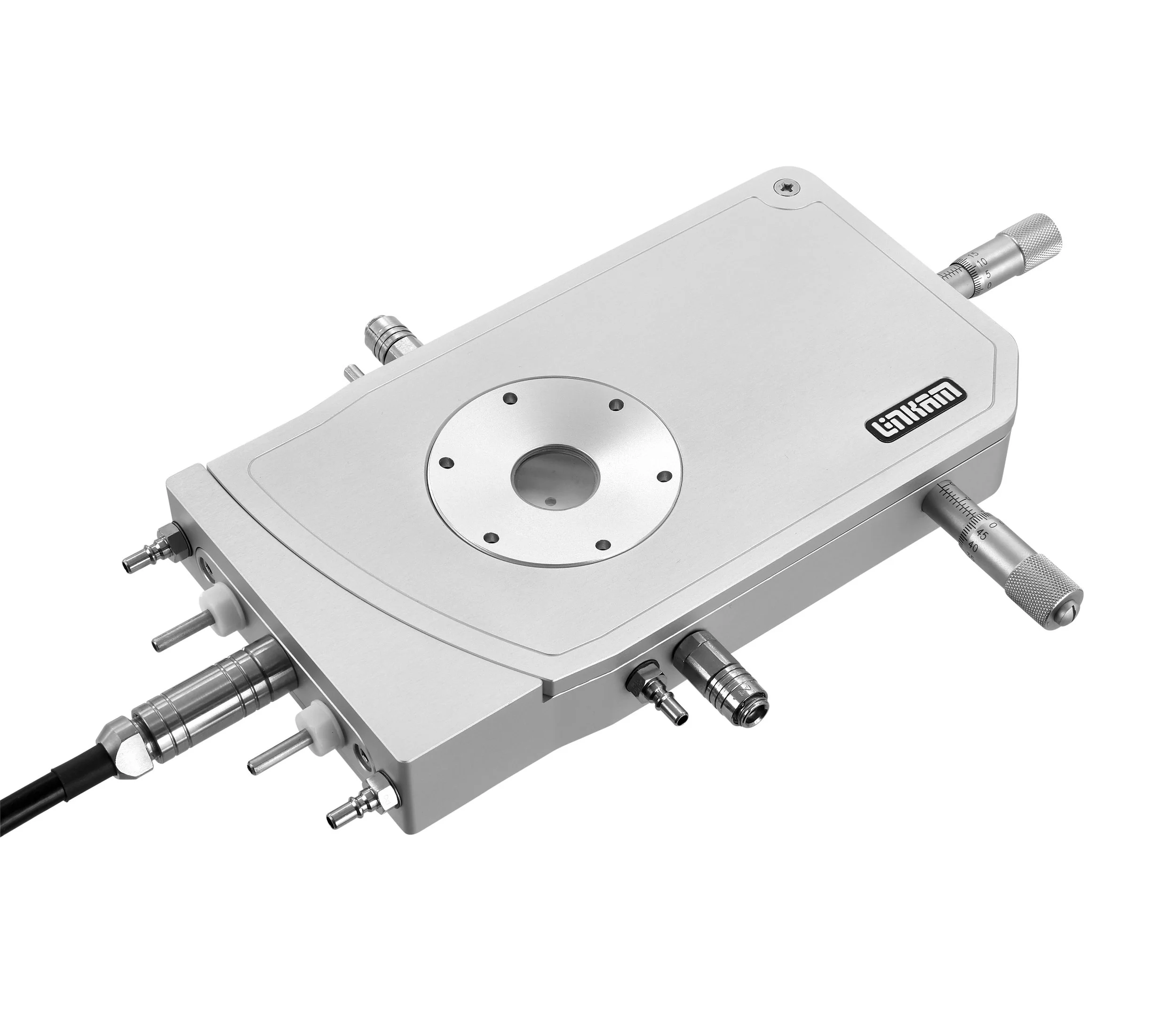
LTS420 shown above

Electronic skins (E-skins) that can mimic the functions of a human skin have been intensively studied in the past few years. They are expected to have a great impact on the upcoming generation of portable and wearable electronics related to the Internet of Things. Even after many breakthroughs in the material sciences, there are still difficulties in achieving high performance and highly functional sensors durable enough for continuous monitoring of human activity and health.

Advanced micro- and nanoscale materials within polymer-based protective layers have been successfully applied for the E-skins. However, it is not only important to study and understand the behavior and properties of these electronic materials, but also to create smart structures to achieve the desired performance for these devices.

A research group from University of Oulu in Finland bypassed common performance and functional issues by combining advanced materials and an ingenious structure to achieve mechanosensitivity to different stimuli, high sensing performance, and functionality within the device. The structure not only provided simultaneous ability to be adhered to a human skin or be attached to clothes or textiles, but also possibilities for precise tuning of the response to achieve optimal performances for different locations in the human body. The devices were able to record human activity and health in a reliable manner, providing adequate long-term durability with machine washability.

The group used a TST350, now superceeded by the LTS420 to test the tensile properties of their sample. When asked about the purpose of the stage, author Jarrko Tolvanen explained: “In our research the Linkam TST350 stage has provided a reliable way to record the stress-strain curve of various materials. Also, this stage has enabled easy and quick way of testing the mechanical properties under controllable temperature and humidity conditions, that could be proven advantageous when further improving and optimizing the performance of a strain sensor.”

Although more testing is required for long-term durability and environmental stability, the group’s work is a promising start in achieving high performance wearable sensors.

Read the research here

The Role of Temeprature in Studying Slip Hydrodynamics in Polymer Melts

drop-of-water.jpg

The movement of liquid molecules along a solid surface is called hydrodynamic slip. This event is central to understanding how fluids are transported at the smaller scales.

Between a solid and liquid interface, friction is present. When this friction is extremely high, the velocity of the fluid at this interface can be considered zero - this is called the “no-slip” boundary. This can be used to assume fluid flow at macroscopic scales, however there has been much focus in the last few decades to understand this at the more microscopic scale.

A cross-disciplinary research collaboration* aimed to develop a fundamental understanding of the physics of fluid flow. They investigated a long-standing question in fluid dynamics by trying to understand the factors that control friction at a solid/liquid interface. The group did so by conducting experiments using novel techniques that allowed them to precisely measure nanoscale fluid flow.

When discussing their experimental setup, Dr Mark Ilton said: “We use several Linkam stages in the labs, all in the THMS family. The Linkam stages provide a standardised way to thermally anneal our samples across the various labs involved in the collaboration. The simplicity, quick ramp-rates, and remarkable long-term stability are all key features. Since the viscosity of the polymeric fluids, a crucial parameter in our measurements, is highly sensitive to temperature, the precision of the Linkam stages is integral to the experiments. The size of the sample stage provided enough room to have a control sample side-by-side with a sample of experimental interest. This was a crucial part of our experimental protocol and enabled the data quality that supported our conclusions.”

Their experiments demonstrated that solid substrates that are considered “ideal” (coated silicon wafers, where the solid/liquid interactions are weak compared to uncoated substrates) can still have consequential friction due to transient adsorption of liquid molecules. This has important repercussions for products that use such coatings as they may not be as ideal as first thought.

By Tabassum Mujtaba

Bäumchen et al., Adsorption-induced slip inhibition for polymer melts on ideal substrates. (2018) Nature Communications, volume 9, Article number: 1172

*McMaster University, University of Massachusetts Amherst, University of Bordeaux, Global Institution for Collaborative Research and Education, Hokkaido University, Laboratoire de Physico-Chimie Théorique, PSL Research University, Max Planck Institute for Dynamics and Self-Organization & Ecole Polytechnique.

Cooling Rate Dependent Polymorphic Liquid Crystals

Polarised optical photomicrographs of liquid crystals show the change in texture caused by slow cooling.

Polarised optical photomicrographs of liquid crystals show the change in texture caused by slow cooling.

Polymorphism is the existence of more than one form. In the case of liquid crystals, this is when a material can exist in two or more crystal structures. As the structures vary, this in turn affects their function and properties. Finding liquid crystal polymorphs would be advantageous for many different fields including engineering, pharmaceuticals and sensors. 

Real polymorphisms are difficult to find in rod shaped liquid crystals. Previous studies have shown that bent-core liquid crystals, although their phases can vary depending on cooling rate, havesmectic structures and x-ray diffraction patterns that are almost identical. 

A collaborative research effort from the Kent State University and Lawrence Berkeley National Laboratory found a polymorphic bent core liquid crystal that has structurally and morphologically independent liquid crystal phases that are cooling rate dependent. As their structures differ, so does the structural colour, paving way for a range of potential applications. 

The group conducted several different experiments to identify the liquid crystal polymorphs. They used Polarised Light Optical Microscopy to visualise the cooling rate dependant formation. To do so, the team used the Linkam LTS420E to conduct their temperature-controlled experiments, both heating and cooling the samples. 

They found that upon slow cooling oblique columnar phase forms and on rapid cooling, helical microfilament phase forms were produced. This change in structure was also accompanied by a unique colour change. 

This novel finding highlights the ability to control liquid crystal structure through temperature control. The change in colour facilitated by the structural transformation, could be used in future applications of thermal sensors and security tags.  

By Tabassum Mujtaba

Hegmann et al., An unusual type of polymorphism in a liquid crystal. (2018) Nature Communications volume 9, Article number: 714
 

The Role of Transition Metal Oxides in Today’s Smart Devices

Vanadium oxide could have a promising future in applications of smart devices.

Vanadium oxide could have a promising future in applications of smart devices.

Vanadium is a transition metal that has 11 oxide phases. Vanadium oxide thin films undergo phase transitions that are stimuli-dependant. This transition can be triggered by temperature or electrical input. An increase in temperature induces a crystal reorientation which causes an insulator-metal transition (IMT). This transition also changes the optical properties of the material, which opens the door for applications in optoelectronic devices. 

One particular oxide, VO2, is theoretically well suited to application in optoelectronics because the phase change occurs at temperatures at which electronics can function, 67°C. Furthermore, the optical transition features a transparent to nearly opaque change at near infra-red wavelengths. These properties can be exploited for various applications including memory devices and smart windows. 

However, VO2 thin film deposition has long suffered from substrate dependency and lack of scalable synthesis. Incorporation into electronic devices relies on special substrates to maintain material functionality. Sensitivity to oxygen levels also proves problematic for large scale synthesis. 

A collaborative effort from RMIT and the university of Adelaide worked towards resolving some of the drawbacks in VO2 fabrication. They found a way to harness its properties in ways that had not been accomplished in the past. 

The group used a magnetron sputtering process to synthesise the material and tested it on glass, quartz and float-zone silica substrates. They used an LTS420 to conduct the optical measurements in situ while heating the films on various substrates. In situ heating with controlled ramps allowed them to take a closer look at optical properties of VO2 thin films at different temperatures.

 Unlike current methods, theirs was shown to be substrate independent, repeatable and less sensitive to oxygen concentration, thereby rendering it a promising method to fabricate VO2 thin films. 

With substrate-independence insulator-to-metal (IMT) behaviour, they can expand on VO2 applications in an electrical context in the form of switching devices and optically in the infrared, microwave and terahertz wavelengths. One near-term application is the so-called “Smart Window”, which is essentially a window made of vanadium dioxide coated glass that can be used to naturally regulate the temperatures inside an office, block, house, room or a building. 

By Tabassum Mujtaba

Bhaskaran et al., Insulator–metal transition in substrate-independent VO2 thin film for phase-change devices. (2017) Scientific Reportsvolume 7, Article number: 17899